Margush
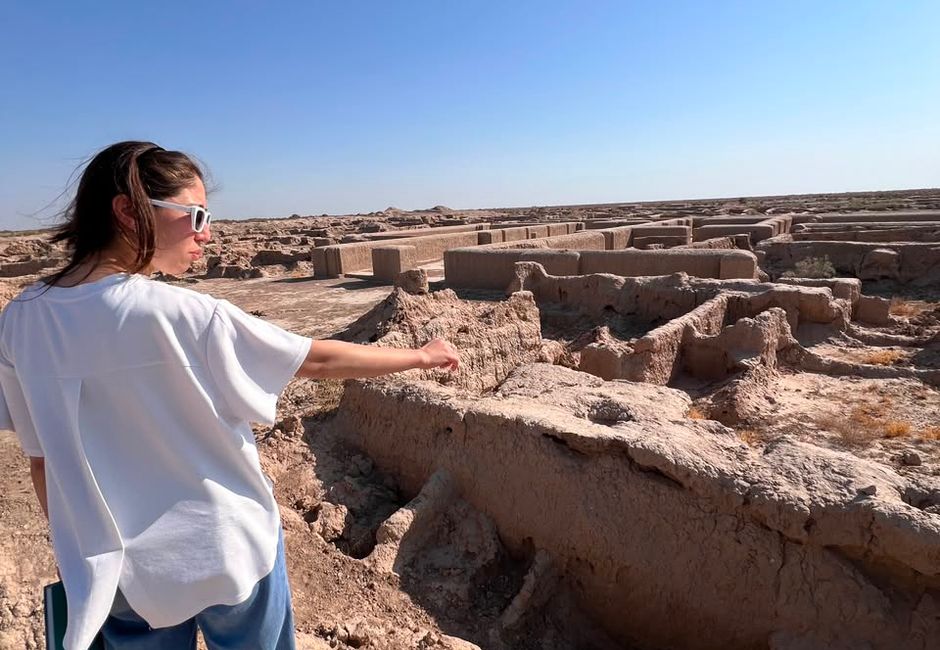
Four thousand years ago, while pyramids rose in Egypt and ziggurats in Mesopotamia, a sophisticated Bronze Age kingdom flourished in the delta of the Murghab River — and almost nobody outside archaeology has heard of it. The country was called Margush, a name old enough to appear in the Behistun inscription of Darius I; its capital, Gonur Depe, sprawled across 55 hectares of what is now the Karakum Desert. The site was occupied from roughly 2400 to 1600 BC as the heart of what scholars call the Oxus civilization, and its scale still startles: a walled palace complex, temples with fire altars, and a royal necropolis of underground burial chambers that yielded gold, silver and bronze treasures, alongside a larger cemetery of more than three thousand graves. The man who put Margush on the map was Viktor Sarianidi, who picked pottery from the desert surface in 1972 and then excavated here for four decades until 2013. He argued that this was nothing less than a fifth centre of ancient world civilization, and that its fire altars and traces of a ritual drink pointed to the roots of Zoroastrianism — claims other scholars still debate, which is part of what makes standing here so interesting: this is archaeology with the questions still open. The kingdom's end was quieter than Merv's — the Murghab simply shifted west, and the city died of thirst. Gonur Depe lies about 60 km north of Mary, the last stretch on rough desert track: a genuine expedition, not a stop. On GÖL NOMADS private tours we run it as a full day from Mary with a packed lunch and a 4WD; there is no shade and no ticket booth, just you, the wind, and a city older than most legends. Best paired with Merv the following day — the contrast between the Bronze Age and the Silk Road is the whole story of this oasis.
April-June, September-October
Full day
Highlights
Travel Tips
- •Wear comfortable walking shoes – the site covers a large area with uneven terrain
- •Bring plenty of water and sun protection – there is limited shade
- •Hire a local guide to fully understand the historical significance