Things To Do
From ancient Silk Road ruins to natural wonders, discover the endless experiences awaiting you in Turkmenistan
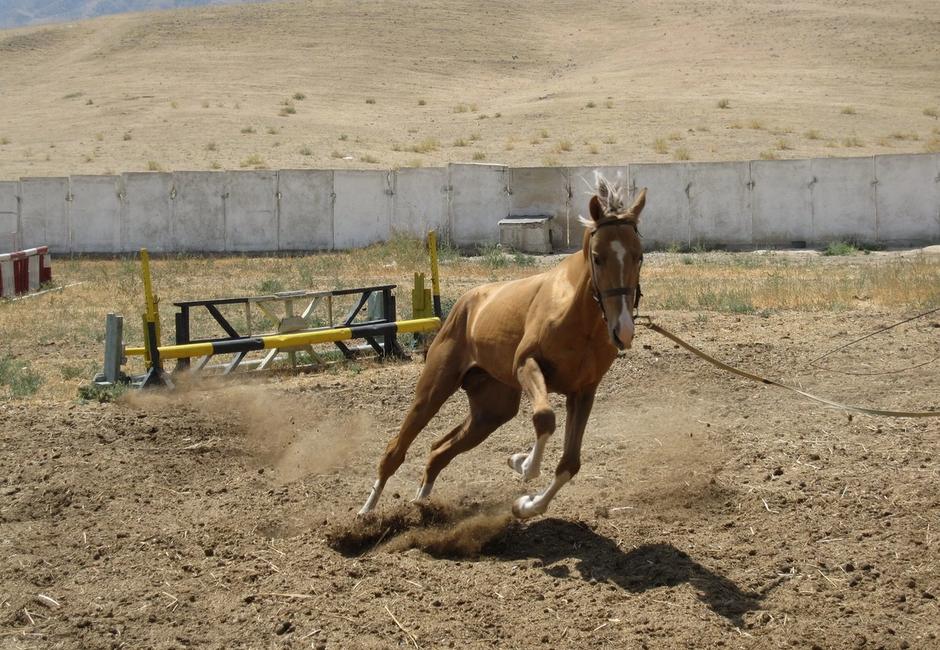
Akhal-Teke Horse Breeding
Turkmenistan is the only country in the world whose state emblem carries a portrait of a horse — the celebrated stallion Yanardag — and once you have seen an Akhal-Teke move, you understand why. Bred in the Akhal oasis by the Teke tribe, with ancestors reaching back some 3,000 years, this is one of the oldest horse breeds in existence, and certainly the most otherworldly to look at: certain coats, especially the golden duns, catch sunlight with a metallic sheen that photographs simply fail to capture, earning them the old names of "golden horses" and — in ancient China — "heavenly horses". They are desert animals through and through: lean, long-lined, built for heat and distance rather than bulk. The breed's defining legend is documented fact — in 1935, Turkmen riders took their Akhal-Tekes 4,000 km from Ashgabat to Moscow in 84 days, including a three-day, 378 km crossing of the Karakum with no water. No other breed has ever matched it. They remain rare: only around 6,600 exist worldwide, roughly half of them here in Turkmenistan, which treats the horse as a living national treasure — complete with its own state holiday, Turkmen Horse Day, on the last Sunday of April, when Ashgabat fills with races and shows. For visitors, the way to meet them is at a private breeding farm outside Ashgabat, and most GÖL NOMADS itineraries include exactly that: you walk the stables with the breeder, watch the horses run, and — if you wish — sit in the saddle yourself. It is consistently one of the moments our guests talk about afterwards, even the ones who came for the ruins. If your dates allow, we can time your private tour around the April festivities; tell us when you plan to travel and we will build the rest around it.
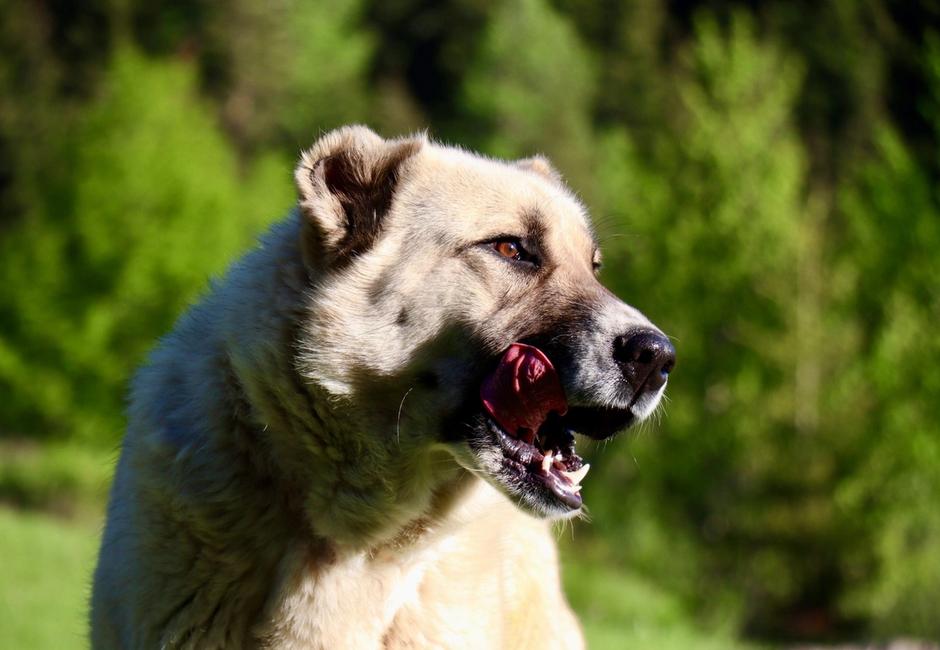
The Art of Breeding Turkmen Alabay
Some countries put a lion or an eagle on their symbols; Turkmenistan's guardian animal is alive, weighs up to 80 kilograms, and will size you up calmly from across a village yard. The Alabay — the Central Asian shepherd dog as Turkmens have bred it for millennia — is one of the world's oldest working breeds, shaped not by shows but by real work: guarding flocks against wolves on the open steppe. The result is a dog of imposing bulk and unnerving composure; an Alabay rarely barks twice when once will do. In December 2025, UNESCO added the art of breeding the Turkmen Alabay to its Intangible Cultural Heritage of Humanity list, and the craft it recognizes is genuinely old: bloodlines are memorized like family trees, the know-how passes from master breeder to apprentice, and in villages you will still spot puppies wearing small handmade charms against the evil eye — dogs are family here, and treated accordingly. Modern Turkmenistan has turned that old bond into open veneration. A 15-metre gilded Alabay statue stands on a roundabout in Ashgabat; the breed was the official mascot of the 2017 Asian Indoor and Martial Arts Games; and on the last Sunday of April — the same day the Akhal-Teke horses are celebrated — the country holds a national Alabay holiday, complete with a contest that crowns the year's finest dog. For travelers this is one of the easiest pieces of living culture to actually touch: on GÖL NOMADS private tours you will meet Alabays at village homes, desert camps and breeding kennels — always with an owner beside you, which with this breed is not a formality. Ask your guide for the stories; every Turkmen family seems to have one about a grandfather's dog, and they are rarely exaggerated by much.
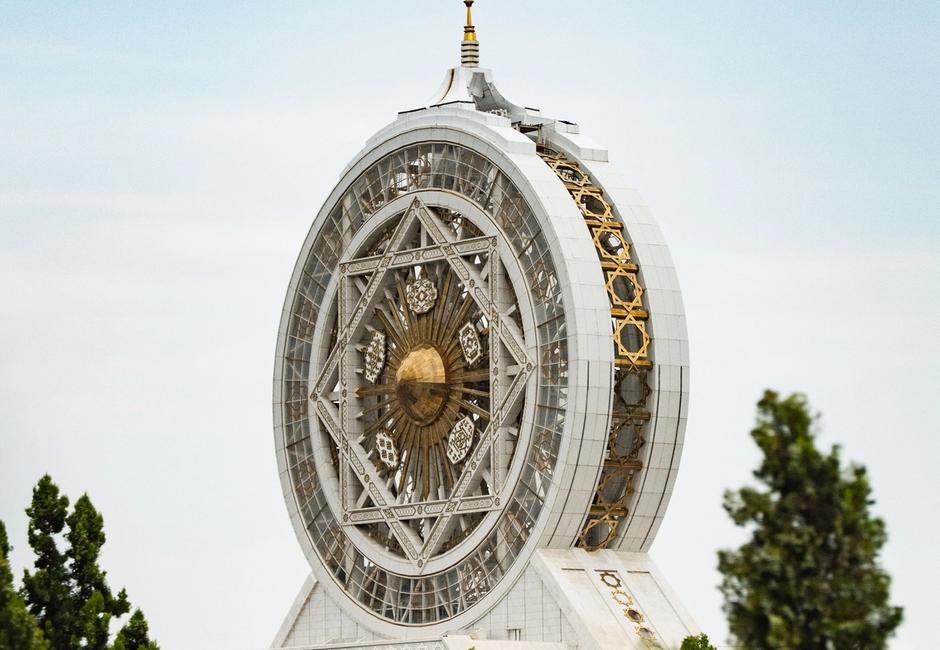
Alem Ferris Wheel
Rising above the gleaming skyline of Ashgabat, the Alem Cultural and Entertainment Center feels less like a typical attraction and more like something out of a futuristic dream. Opened in 2012, this striking white structure quickly became one of the city's most recognizable landmarks—not just for its scale, but for what it holds inside. Standing 95 meters tall, the building is designed across six levels of entertainment, yet all eyes are drawn upward to its most extraordinary feature: a giant Ferris wheel enclosed within a shimmering glass and steel frame. At the time of its opening, the wheel earned a place in the Guinness World Records as the tallest indoor Ferris wheel in the world, setting it apart from anything travelers might have seen before. Its name, 'Alem', translates to 'The Universe', a fitting description for a place that combines scale, ambition, and a sense of wonder. Designed by the renowned Fabbri Group, the wheel offers a smooth and climate-controlled ride, making it enjoyable in any season—whether escaping the summer heat or the winter chill. The building itself tells a story through its architecture. Its stepped, pyramid-like form reflects traditional Turkmen design elements while embracing a sleek, modern aesthetic. As the wheel slowly carries visitors upward, the view unfolds into a panorama of a city often called the 'City of White Marble,' where grand boulevards and luminous buildings stretch toward the horizon, framed by the distant Kopetdag Mountains. As evening falls, the experience shifts. The Alem Center transforms into a glowing centerpiece, illuminated with vibrant colors that highlight its geometric design and make it one of the most photogenic spots in the city. Inside, the atmosphere is lively yet refined, with attractions like a bowling alley, cinema, and even a planetarium offering visitors more than just a ride. It becomes a place where families gather, travelers pause, and the idea of entertainment blends seamlessly with architecture. Visiting the Alem Center isn't just about ticking off a record-breaking attraction—it's about stepping into a space where design, culture, and imagination come together, creating an experience that feels, quite appropriately, a little like exploring a universe of its own.
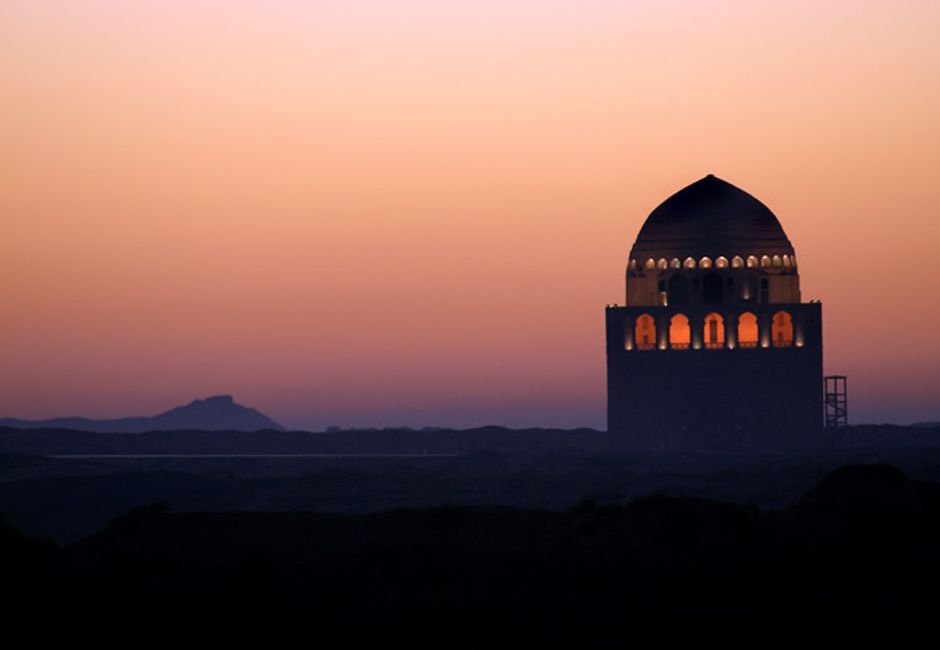
State Historical and Cultural Park "Ancient Merv"
Around the year 1150, the largest city on Earth was not Constantinople or Hangzhou — by historian Tertius Chandler's reckoning it was Merv, a Silk Road metropolis of some 200,000 people whose libraries and observatories drew scholars from across the Islamic world. Today its walls stand silent in the oasis 27 km east of Mary, and walking them is the closest Central Asia comes to time travel. What makes Merv unlike almost any ancient site is that each era built beside the old city rather than on top of it, so the ruins lie side by side like rings of a tree: Erk Kala, an Achaemenid fortress-mound from the 7th century BC; Gyaur Kala, the Hellenistic and Sassanian city that followed; and sprawling Sultan Kala, the Seljuk capital of the city's golden age. That age ended abruptly in 1221, when Tolui, son of Genghis Khan, took the city — medieval chroniclers put the dead at 700,000 or more, numbers modern historians doubt, but Merv never truly recovered. The monument that survived is the 12th-century mausoleum of Sultan Sanjar, a 27-metre-square chamber whose dome, chroniclers claimed, could be seen a day's march away; nearby stand the Great and Little Kyz Kala, palace-forts with strange corrugated walls found nowhere else on the Silk Road. In 1999 Merv became Turkmenistan's first UNESCO World Heritage site. Practical notes from our guides: the site is enormous — you drive between the monuments rather than stroll them — so plan at least half a day, and go in morning or late-afternoon light when the mud-brick walls turn gold. Every GÖL NOMADS private tour that passes through Mary includes Merv with a guide who can read the layers for you, usually paired with the excellent Mary Regional Museum before or after the site.
Marble Architecture of Ashgabat
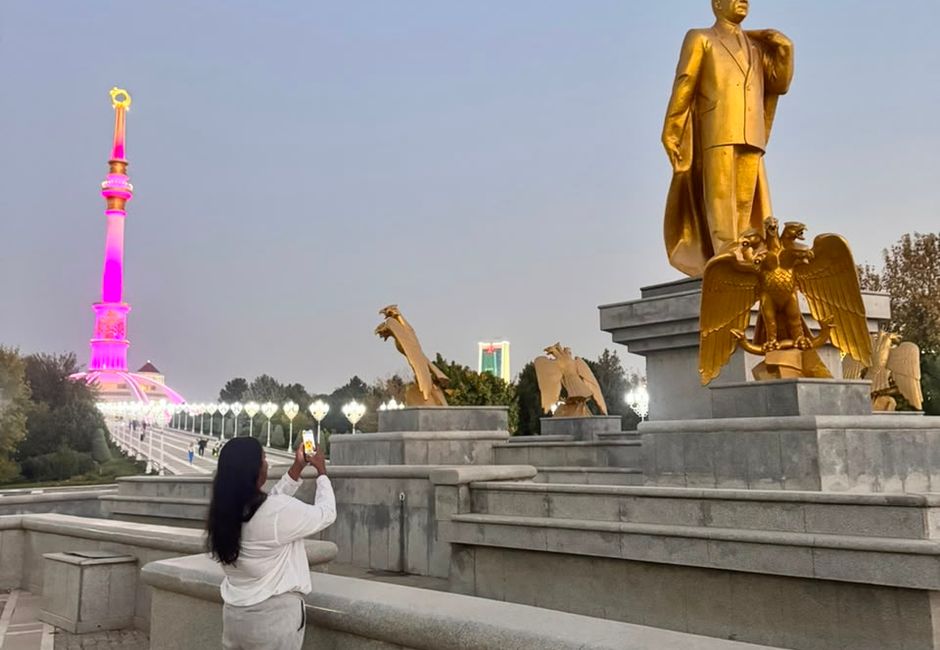
Ashgabat, the capital of Turkmenistan, is one of those cities that feels almost unreal when you first hear about it—an urban landscape rising from the edge of the Karakum Desert and stretching toward the foothills of the Köpetdag Mountains. Sitting in southern Turkmenistan, not far from the Iranian border, it occupies a strikingly dry yet strategically important crossroads of Central Asia, where ancient Silk Road routes once connected traders, empires, and cultures. Although the city was originally founded in 1881 as a Russian imperial outpost, its appearance today tells a much more recent story. Much of the original settlement was destroyed by a powerful earthquake in 1948, an event that reshaped not only the city's architecture but also its identity. In the decades that followed—especially after Turkmenistan gained independence—the city was rebuilt on a massive scale, with grand boulevards, monumental buildings, and an architectural style that leans heavily toward white marble and wide-open space. This transformation eventually led to Ashgabat being widely known as the 'White Marble City,' a nickname reinforced in 2013 when it was recognized by Guinness World Records for having one of the highest concentrations of white marble buildings anywhere on Earth. Walking or driving through Ashgabat today, the effect is striking: long, unusually clean avenues lined with gleaming government buildings, cultural centers, and oversized monuments that reflect the country's modern national identity. Among the most recognizable landmarks are the Monument of Neutrality, symbolizing Turkmenistan's foreign policy stance, and the Alem Cultural and Entertainment Center, home to one of the largest indoor Ferris wheels in the world. The city's design is highly planned, giving it a spacious and orderly feel that contrasts sharply with many older, denser cities in the region. Geographically, Ashgabat is shaped by its environment as much as its architecture. The nearby Karakum Canal, one of the most important infrastructure projects in the region, brings water from the Amu Darya river across vast stretches of desert to support agriculture and urban life. This lifeline has been crucial in sustaining development in such an arid climate. The surrounding landscape also offers dramatic views, especially from higher points near the city, where modern buildings meet desert horizons and mountain silhouettes. The meaning of the city's name adds another layer of intrigue. 'Ashgabat' is often interpreted as 'City of Love' or 'City of Devotion,' though some historians suggest it may be linked to Arsaces I, founder of the Parthian Empire—hinting at deeper historical roots beneath the modern cityscape. Over time, Ashgabat has also become a symbol of national celebration and identity, with May 25th marked annually as City Day, highlighting its relatively recent but carefully curated urban history. What makes Ashgabat especially memorable is the contrast it embodies: a city built on ancient land, shaped by Soviet-era reconstruction, and then reimagined again in the modern era as a showcase of national ambition and architectural spectacle. For travelers and curious observers alike, it offers a rare glimpse into a place where history, symbolism, and futuristic design converge into a single, highly distinctive urban experience.
Awaza Tourist Zone
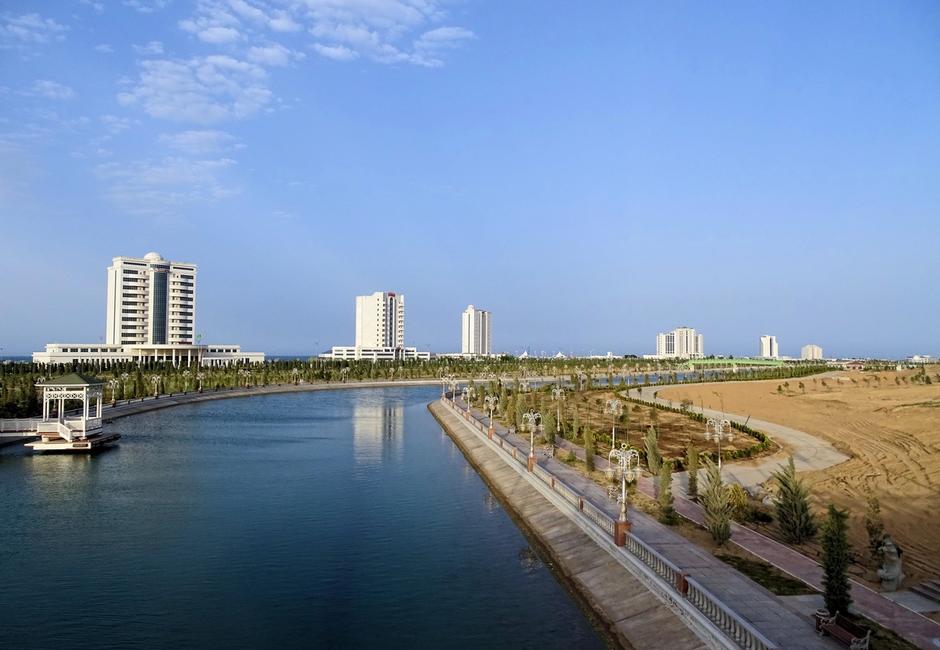
The Awaza National Tourist Zone is a large-scale resort destination located on the eastern shore of the Caspian Sea in Turkmenistan. Spanning 5,000 hectares, the area has transitioned from a small seaside village into a major hub for tourism and international conferences. The geography is defined by long sandy beaches and a dry, hot climate, which supports a peak tourist season that draws approximately 150,000 guests annually. The architectural landscape of the zone is characterized by modern high-rise hotels and extensive recreational infrastructure. A central feature is a seven-kilometer artificial river that allows for small boat navigation through the hotel district. This waterway is crossed by several bridges, many of which feature ornate steel designs resembling local symbols and birds. Another major technical highlight is the Awaza Fountain Complex, located 85 meters offshore. The system uses high-pressure pumps to shoot water jets 20 meters into the air, integrated with holographic laser projections that display 3D animations over the sea. The complex includes specialized facilities such as the Yelken Yacht Club, which manages a 40-vessel marina and provides equipment for windsurfing and sailing. For family recreation, there are several large-scale parks, including an aquapark with indoor and outdoor pools and a theme park designed with replicas of international landmarks like the Eiffel Tower. Many of the buildings are constructed with a focus on wellness, housing sanatoriums that offer treatments using Caspian seawater and therapeutic muds. To ensure a smooth visit, it is practical to keep track of personal belongings, especially in high-traffic areas like the aquaparks or beach clubs. Visitors often use waterproof cases for essential items like phones and keys while swimming. The atmosphere across the park remains quiet and formal, with visitors typically wearing modest attire when away from the immediate beach areas.
Traditional Carpet Weaving
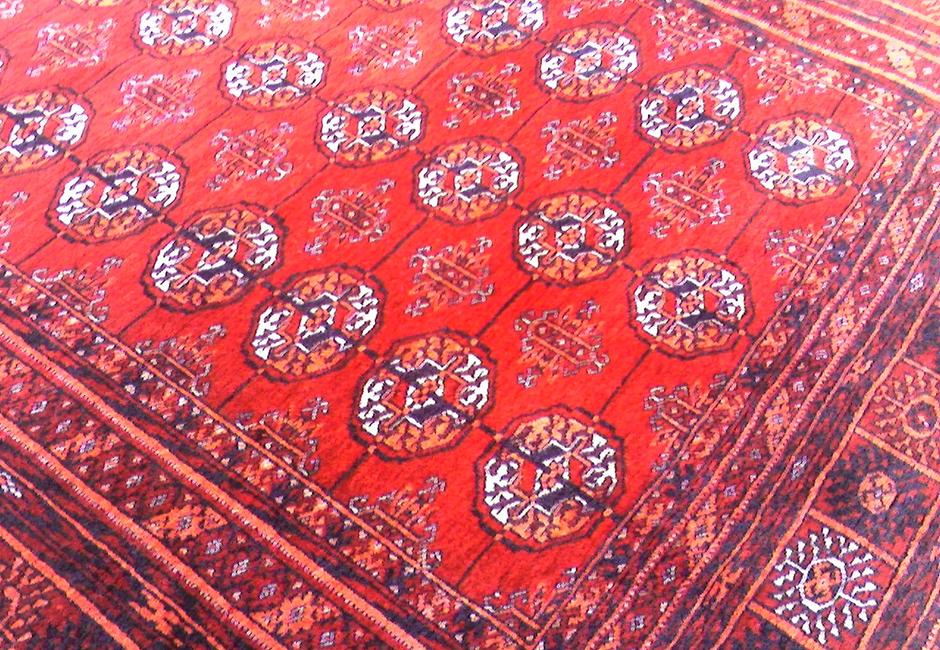
Traditional Turkmen carpet making is a world-famous art form that was officially inscribed on the UNESCO list of Intangible Cultural Heritage in 2019 because it is such a vital part of the history and soul of the nation. These hand-woven woolen carpets are much more than just floor coverings as they represent the identity of the five main tribes of Turkmenistan: the Teke, Yomut, Ersari, Chowdur, and Saryk. Each tribe has its own unique geometric patterns and linear arrangements that reflect the local environment including the plants and animals found in the region. The art of weaving these rugs has been passed down through families for centuries and was originally practiced by nomadic tribes using natural dyes and wool from their own herds. Since these tribes were often on the move, they used portable looms to create everything from large floor rugs to small bags and tent hangings and even special carpets for weddings, births, and prayer rituals. You can see how important this heritage is by looking at the national flag and emblem of Turkmenistan which proudly display the five traditional carpet patterns as a symbol of national unity and religious values. For travelers interested in this incredible craft, a visit to the Turkmen Carpet Museum in Ashgabat is a must as it houses over two thousand exhibits including rare antique pieces and the smallest carpet ever made which was designed to be worn like a key. The museum also highlights the giant achievements of the craft such as the world's largest handmade carpet which covers over three hundred square meters and earned a place in the Guinness Book of Records. If you are visiting in late May, you can join the national celebration of Carpet Day which takes place on the last Sunday of the month to honor the weavers and the beautiful red and tan designs that have made Turkmen carpets famous all over the world.
Darvaza Gas Crater
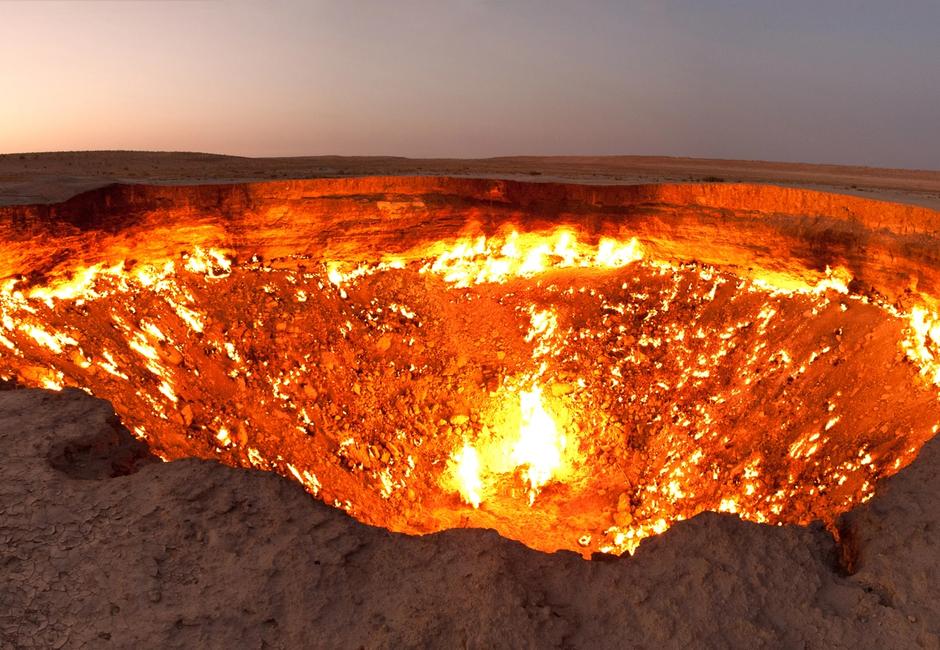
No photograph quite prepares you for the first look over the rim of the Darvaza gas crater — a bowl of fire roughly 70 metres across and 30 metres deep, burning alone in the silence of the Karakum Desert. Travelers call it the Door to Hell or the Gates of Hell; Turkmenistan officially named it the Shining of Karakum. How it was born is, fittingly, a mystery: the often-told version says a Soviet drilling rig punched into a gas cavern in 1971 and the ground gave way, while local geologists insist the collapse happened in the 1960s and the gas was only lit in the 1980s to stop poisonous fumes from spreading. The records are lost or classified — what is certain is that a fire expected to burn out within weeks has outlived the Soviet Union itself. Know before you go: the crater is quieter than it once was. In 2022 the government announced plans to extinguish it, and surveys show the flames have lost more than three quarters of their heat over the past few years. It still glows — hypnotic after dark, when the rim lights up and the desert around you disappears — but this has become a see-it-while-you-can landmark. Darvaza lies about 260 km north of Ashgabat, a four-hour drive with a final stretch of sandy track that needs a 4WD; there is no public transport, which is why every visit runs as part of a tour. On our private tours we time the arrival for dusk, cook a BBQ dinner in the dunes, and overnight in yurts a short walk from the rim — sunrise over the crater is a quieter, stranger sight than the night fire. On the drive you also pass the area's two lesser-known siblings, the water and mud craters. Spring and autumn are the kindest seasons; in mid-summer the desert itself is the hard part.
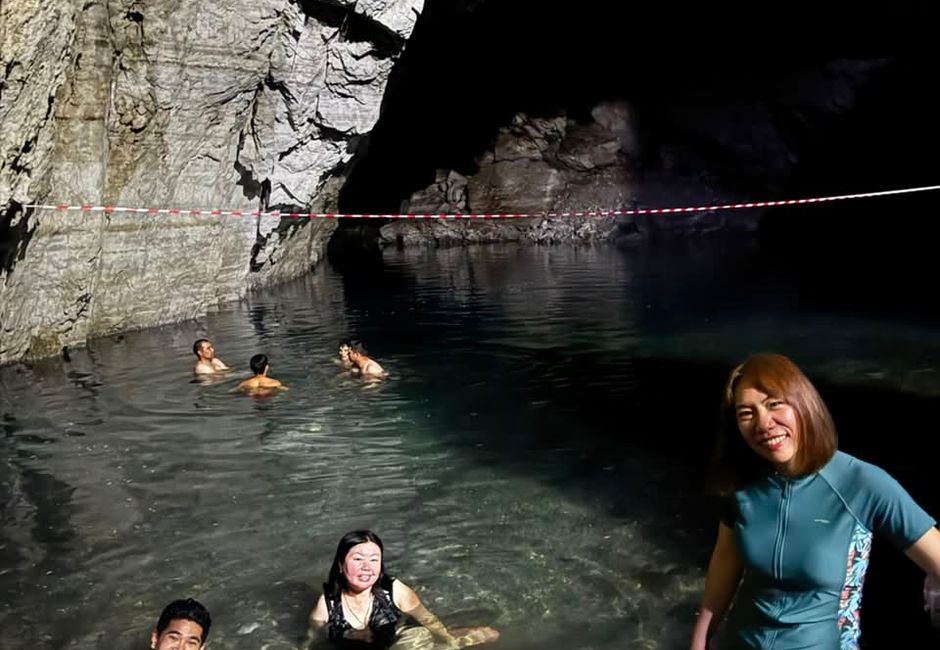
Köw-Ata Underground Lake
Kow-Ata Underground Lake is a unique natural attraction hidden inside a cave at the base of the Kopetdag Mountains. The cave stretches about 250 meters in length and ranges from 12 to 50 meters in width, with five different entrances. The lake itself lies about 55 meters below the third cave entrance. Since no sunlight reaches this depth, the atmosphere inside is dim and mysterious. The lake is approximately 75-80 meters long, with a width that varies between 8 and 23 meters. Its average depth is around 10 meters, reaching up to 15 meters at its deepest point. Water from the lake flows into a sulfur-rich spring, giving it notable mineral properties. The temperature remains fairly stable throughout the year, typically between 33°C and 38°C. The water is clear with a bluish-green tint and is rich in minerals, especially sulfur.
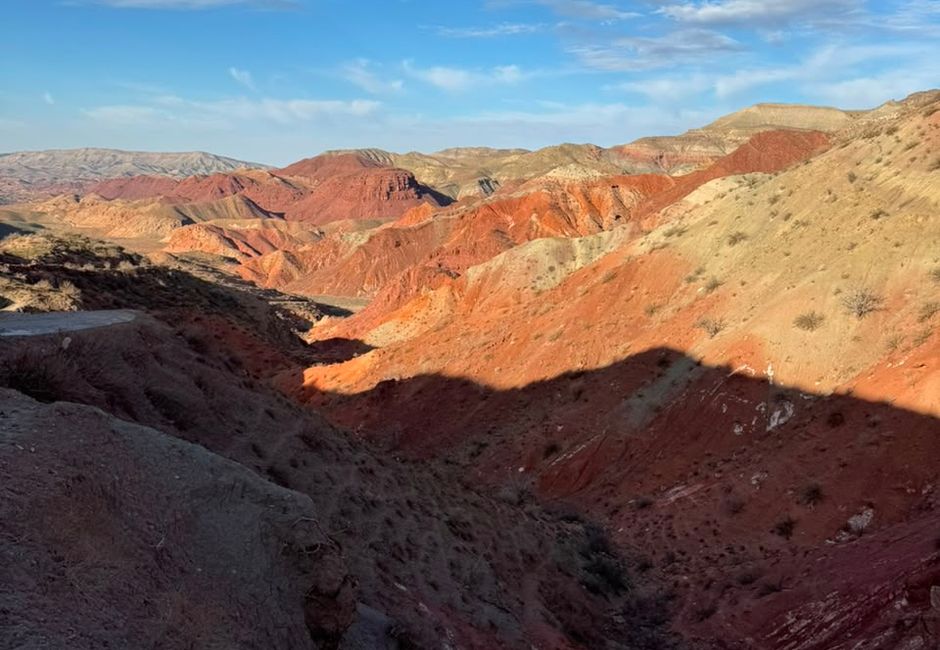
Koytendag Mountains
Hidden in the far east of Turkmenistan, The Koytendag Mountains are a true paradise for adventure lovers and nature seekers. Their name, meaning "Mountains of deep canyons" perfectly captures the dramatic scenery: towering cliffs sliced by deep gorges where the sky sometimes appears as just a thin ribbon above you. This remote region is packed with natural wonders. It is home to the country's highest peak, Mount Ayrybaba (3,139 meters), as well as some of deepest lakes and longest caves of Turkmenistan. One of the most fascinating highlight of Koytendag Mountains is the famous Dinosaur Plateau, where you can still see the footprints of prehistoric giants frozen in stone. The landscape here are just as striking as their history. The foothills glow on shades red thanks to colorful rock formations, while the mountain slopes are covered with rare juniper groves. Higher up, wild grasses, flowers, and shrubs take over, joined by mulberry trees, sycamores, and other fruit trees that bring life and color to this rugged terrain.
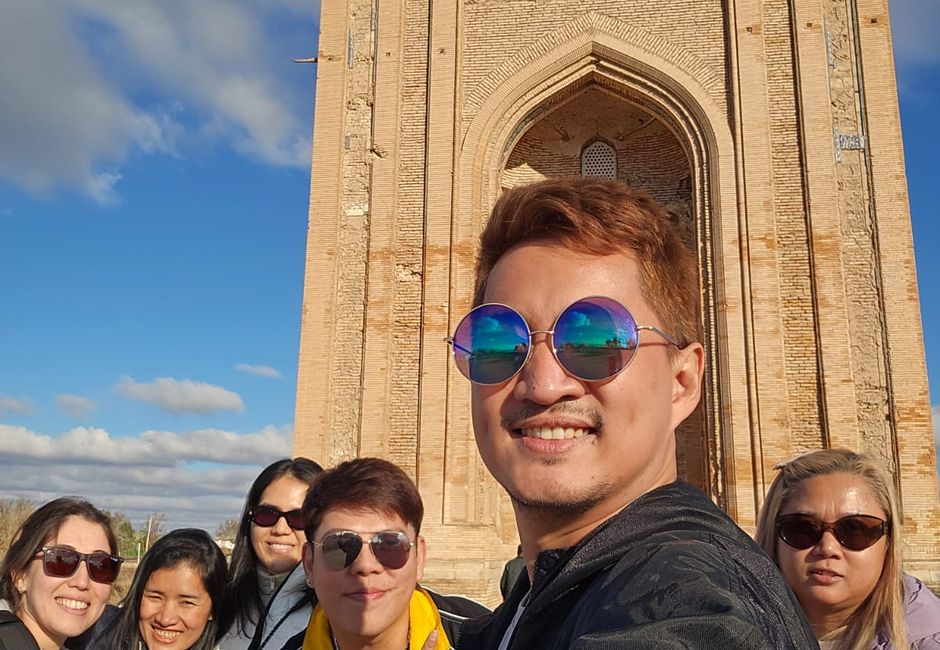
Kunya-Urgench
Kunya-Urgench is what remains of Gurganj, capital of the Khwarazm empire and one of the great cities of the medieval world — a place that had the misfortune of standing in the path of history's two most destructive conquerors. In 1221 Genghis Khan's armies took the city, broke the great dam on the Amu Darya and left the region a marsh, in what chroniclers describe as one of the bloodiest massacres of the age. The city rose again, only for Timur to sack it three times between 1373 and 1388, finally razing it and ordering barley sown over the ruins. What survived that double apocalypse now stands scattered across open steppe near the Uzbek border, and the emptiness is precisely what makes the place so haunting. The Kutlug-Timur minaret, a 60-metre brick needle taller than Bukhara's famous Kalyan, has watched over the ruins for seven centuries. A short walk away is the 14th-century mausoleum of Turabek-Khanum, whose dome carries a mosaic of flowers and stars so intricate that many consider it the finest tile work in Central Asia — the geometry beneath it, a twelve-sided ring over a hexagonal chamber, was mathematics far ahead of its time. At the mausoleum of the Sufi master Najm-ad-Din al-Kubra you will often share the courtyard with pilgrims rather than tourists; this has been sacred ground for seven hundred years. UNESCO inscribed the site in 2005. Practically speaking, Kunya-Urgench is an easy day trip from Dashoguz and sits minutes from the Uzbek border crossings — which is why several GÖL NOMADS private itineraries begin or end here, pairing the ruins with Darvaza on the desert road south. Give it two to three unhurried hours; late afternoon light is kindest to the brick, and spring turns the steppe around the minaret briefly green.
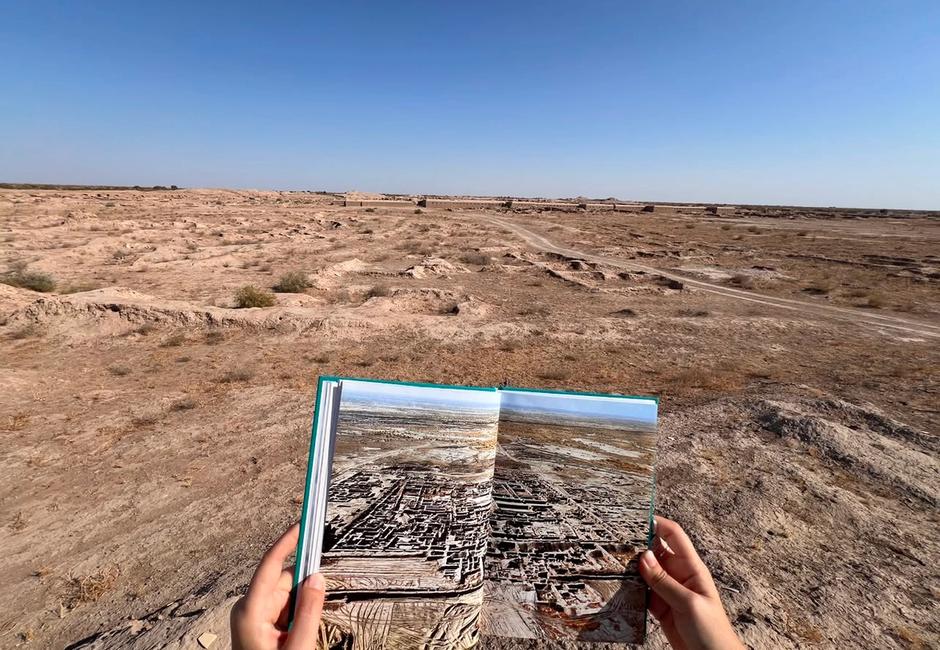
Margush
Four thousand years ago, while pyramids rose in Egypt and ziggurats in Mesopotamia, a sophisticated Bronze Age kingdom flourished in the delta of the Murghab River — and almost nobody outside archaeology has heard of it. The country was called Margush, a name old enough to appear in the Behistun inscription of Darius I; its capital, Gonur Depe, sprawled across 55 hectares of what is now the Karakum Desert. The site was occupied from roughly 2400 to 1600 BC as the heart of what scholars call the Oxus civilization, and its scale still startles: a walled palace complex, temples with fire altars, and a royal necropolis of underground burial chambers that yielded gold, silver and bronze treasures, alongside a larger cemetery of more than three thousand graves. The man who put Margush on the map was Viktor Sarianidi, who picked pottery from the desert surface in 1972 and then excavated here for four decades until 2013. He argued that this was nothing less than a fifth centre of ancient world civilization, and that its fire altars and traces of a ritual drink pointed to the roots of Zoroastrianism — claims other scholars still debate, which is part of what makes standing here so interesting: this is archaeology with the questions still open. The kingdom's end was quieter than Merv's — the Murghab simply shifted west, and the city died of thirst. Gonur Depe lies about 60 km north of Mary, the last stretch on rough desert track: a genuine expedition, not a stop. On GÖL NOMADS private tours we run it as a full day from Mary with a packed lunch and a 4WD; there is no shade and no ticket booth, just you, the wind, and a city older than most legends. Best paired with Merv the following day — the contrast between the Bronze Age and the Silk Road is the whole story of this oasis.
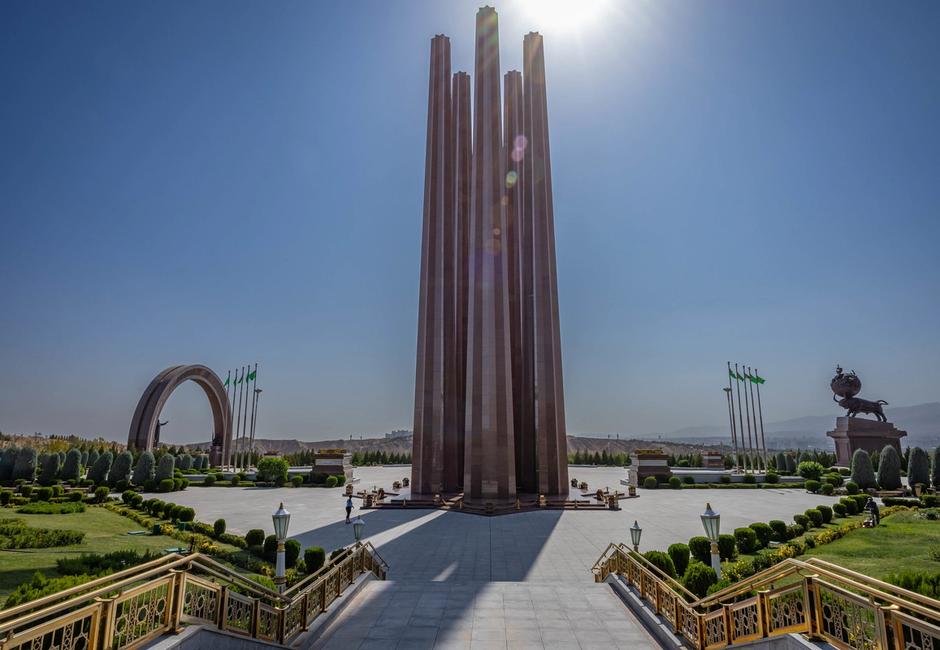
National Memorial Complex
The Halk Hakydasy Memorial Complex sits on the southwestern edge of Ashgabat, acting as a vast, quiet park where the history and courage of the Turkmen people come to life. Known as People's Memory, this massive space opened in 2014 and is filled with the sound of fountains and the sight of endless flower beds. As you wander through the grounds, you encounter three powerful monuments that mark the turning points of the nation's past. You'll see the tribute to the soldiers from the 1881 Battle of Geok Tepe and the World War II memorial, which features five tall steles of deep red marble that surround an eternal flame like the petals of a flower. Perhaps the most moving sight is the Earthquake Memorial, where a giant bronze bull holds the world on its horns, a legend brought to life to honor those lost in the 1948 earthquake that reshaped the city. Look closely at the small child held aloft by the woman on the bull; he is cast in gold and represents the future of the nation rising from the ruins. Deep inside the complex, a museum preserves these stories further through two halls filled with old uniforms, firearms, and rare photographs of the city before the great quake. This museum is actually built underground to symbolize a journey into the roots of the country's history. As evening falls, the entire park is bathed in the glow of powerful searchlights that reach high into the dark sky, creating a peaceful atmosphere for a walk. It is best to visit during these cooler hours with comfortable shoes, as the complex stretches nearly a kilometer long and features an eternal flame that never goes out, guarded by soldiers in ceremonial uniform. Because this is a place of deep respect and remembrance, visitors walk quietly in modest dress, often pausing to look at the architecture or the moving paintings by local artists. While it is a beautiful spot for photography, especially with the contrast of the red stone and bronze against the night sky, the air remains somber and still, inviting you to simply reflect on the history carved into the marble and bronze around you.
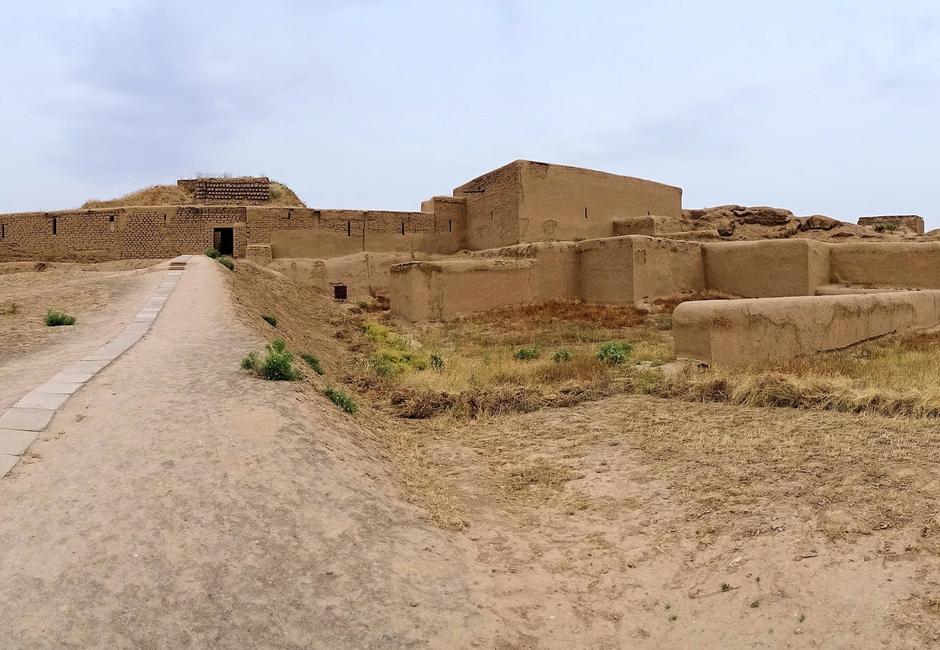
Parthian Fortresses of Nisa
Two thousand years ago, the empire that Rome feared most ruled from the foothills of the Kopetdag — and Nisa was its royal seat. Founded, tradition holds, by Arsaces I around 250 BC and later renamed Mithradatkert, the "fortress of Mithradates", this was where the early Parthian kings kept their palaces, shrines and treasury while their cavalry humbled Roman legions far to the west. The city's end came not by siege but by earthquake, which levelled it in the first decade BC — a strangely fitting fate for a place whose walls now melt softly back into the earth they were raised from. The site is really two mounds: Old Nisa, the royal citadel whose 43-hectare platform visitors walk today, and New Nisa, the town tell beside it. Together they were inscribed by UNESCO in 2007 as the Parthian Fortresses of Nisa. Excavations — Soviet first, then a long-running Italian mission — uncovered grand ceremonial halls, inscribed archives and a famous hoard of ivory rhytons, ornately carved Parthian drinking horns; you can meet the finest of them afterwards in Ashgabat's National Museum, which is exactly how we sequence it on our private tours. What you see on the ground is quietly powerful rather than grand: massive mud-brick ramparts, the outlines of the Round Hall and tower rooms, and behind it all the wall of the Kopetdag mountains on the Iranian border. Nisa lies just 18 km west of Ashgabat, so it slots easily into a half-day — on most GÖL NOMADS itineraries it opens the day that continues to the vast Türkmenbashy Ruhy Mosque in nearby Gypjak, an Akhal-Teke horse farm and the Kow-Ata underground lake. Come in the morning before the heat, and let the guide bring the empire back up out of the clay.
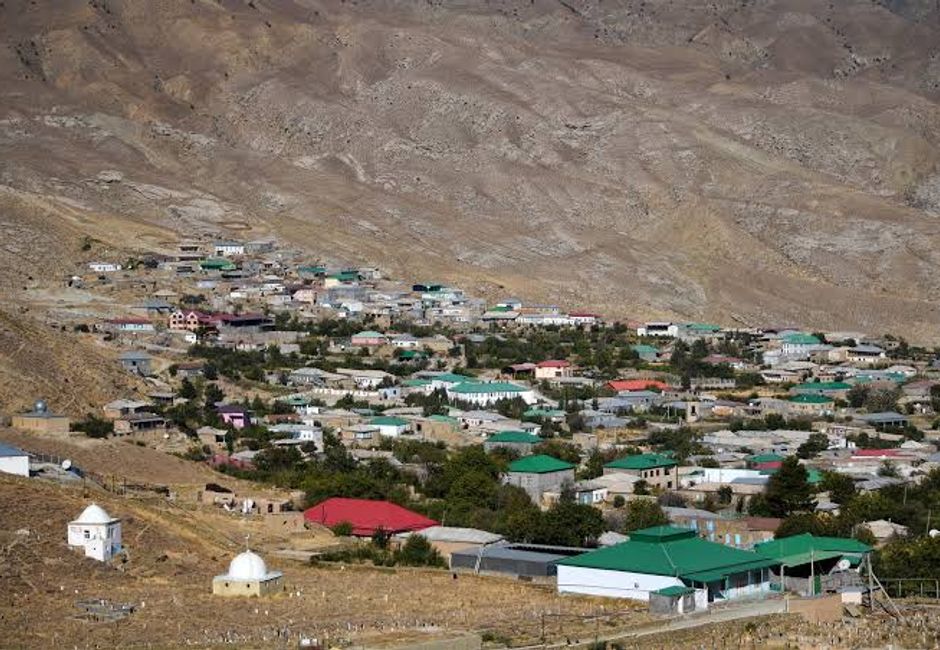
Nohur Village
Nohur is a small village located in the Kopetdag Mountains. Surrounded by rugged landscapes, it serves as the cultural center of the local community and is known for its strong traditions and unique heritage. The village is famous for its sacred sites and legends, many of which are linked to ancient Persian beliefs about mystical beings called "Peri". One of the most notable places nearby is Gyz-bibi Cave, a site of spiritual significance for locals. The origin of the name "Nohur" is still debated. Some believe it is connected to Noah, while others link it to local legends or ancient Persian words. Over time, different interpretations have emerged, adding to the village's mystique and cultural depth. Due to its remote location, Nohur has preserved much of its traditional lifestyle. The local community, known as the Nohurli, maintain customs and beliefs that have been passed down for generations. Some even trace their ancestry back to the soldiers of Alexander the Great, and local folklore includes stories tied to his journey through the region. One of the village's most unusual features is its cemetery, where gravestones are often decorated with ram horns – a tradition unique to the area. Nature lovers can also explore nearby attractions such as the Khur-Khuri Waterfall and the scenic Ai-Dere Canon, both offering beautiful landscapes and peaceful hiking spots.
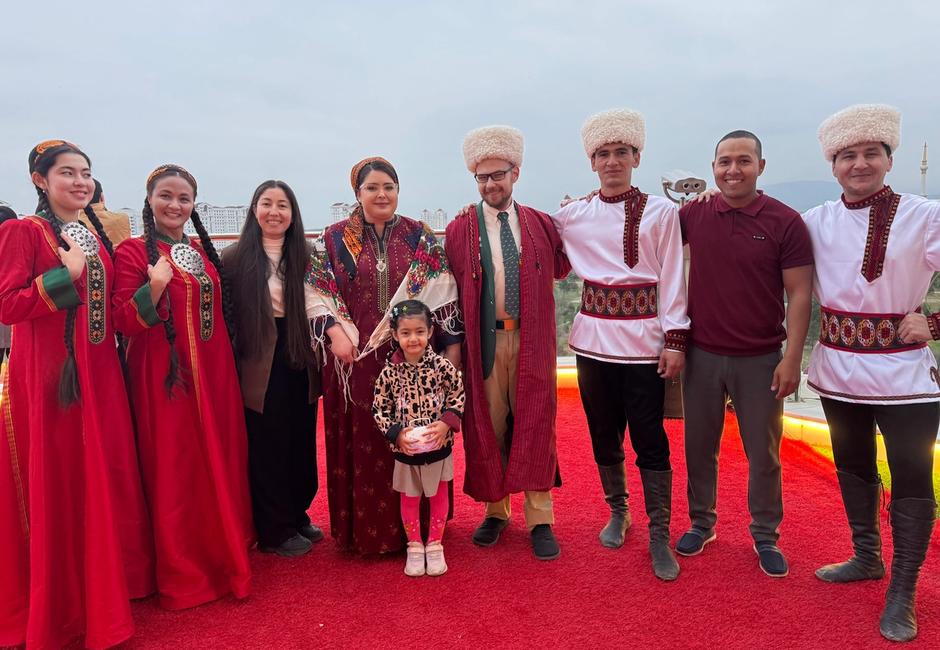
The Language of Dress in Turkmen Culture
Turkmen traditional dress is one of the most vibrant and recognizable cultural expressions in Central Asia, reflecting a seamless blend of practical nomadic life and refined handcrafted artistry passed down through generations. For men, the most distinctive element of traditional attire is the Telpek, a large shaggy sheepskin hat typically made in white or black, designed not only as a cultural symbol but also as practical protection against the extreme climate of the desert, keeping the head cool in summer and warm in winter. Beneath this, men traditionally wear a koynek, a simple white shirt often distinguished by subtle yet intricate embroidery around the collar, paired with don and chakmen, heavy robes made from silk or wool that are especially notable in their deep red tones traditionally achieved through natural dyes such as pomegranate, and completed with balak, wide and comfortable trousers suited to the movement and demands of a nomadic lifestyle. Women's traditional clothing is equally expressive, centered around long flowing silk koynek dresses that are typically worn in bright shades such as red or purple, reflecting both aesthetic beauty and cultural identity, with each garment carefully detailed through hand stitched embroidery along the neck and cuffs where patterns often carry meanings tied to specific tribes or family heritage. A key part of women's dress is the yalyk, a beautifully patterned headscarf that not only serves as everyday attire but also communicates aspects of a woman's status and cultural background within her community. Complementing this rich clothing tradition is Turkmen jewelry, which is among the most distinctive in the region and is traditionally crafted from silver and adorned with semi precious stones such as turquoise and carnelian. These pieces were never purely decorative as they were historically believed to provide protection from misfortune and contribute to health and wellbeing while also serving a deeper social function, as the weight, design, and arrangement of bracelets, brooches, and headpieces once helped identify a person's tribal affiliation or regional origin, turning jewelry into a living record of identity and heritage.
Discovering Turkmen Cuisine
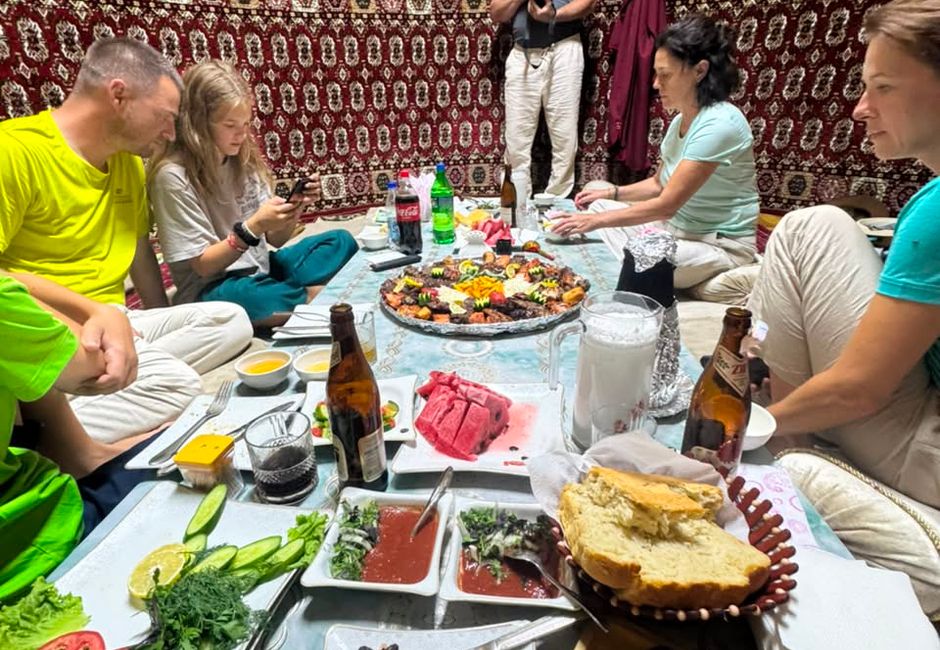
Turkmen cuisine tells the story of a nomadic people who learned to create rich, satisfying meals from simple ingredients, allowing natural flavors to take the lead rather than relying on heavy spices. Meat is at the heart of nearly every table, especially lamb, chicken, and even camel, prepared in ways that highlight its depth and texture. One of the most familiar sights is shashlyk, skewers of meat grilled slowly over charcoal and served with fresh onions, while gowurma offers something more rustic, with meat fried in its own fat and preserved for later. Yet the true centerpiece of Turkmen cooking is palaw, a deeply symbolic dish in which rice is cooked together with tender mutton, sweet carrots, and whole garlic, creating a fragrant and comforting meal often associated with celebration and hospitality. Alongside these dishes, bread holds a place of deep respect in daily life. Çörek, the traditional flatbread, is baked in clay ovens and shared at every meal, treated almost as something sacred, while pishme, small pieces of lightly sweet fried dough, are offered to guests as a sign of welcome. Dumplings also play an important role, with manty and somsa appearing across the country, filled with meat, onions, or sometimes pumpkin, reflecting the seasonal rhythms of the land. One dish that beautifully captures the spirit of resourcefulness is dograma, where pieces of bread are mixed with shredded boiled meat and onions, then moistened with broth, creating a humble yet deeply flavorful meal that connects directly to the nomadic past. Beyond the savory dishes, Turkmenistan is famous for its extraordinary melons, with hundreds of varieties so cherished that they are honored with a national celebration. Their sweetness reflects the richness of the land, just as pumpkins appear in soups or are used as vessels for slow-cooked meals. To complete the experience, green tea flows constantly throughout the day, offering warmth and connection, while traditional drinks like gatyk, a thick yogurt drink, and çal, fermented camel's milk, provide a refreshing tangy contrast to the richness of the cuisine. Through it all, there is an unspoken rule that reveals the culture itself: bread must always be treated with care, never turned upside down or wasted, as it represents not just nourishment, but respect, history, and the enduring spirit of Turkmen life.
The Mausoleum and the Spiritual Mosque of Turkmenbashy
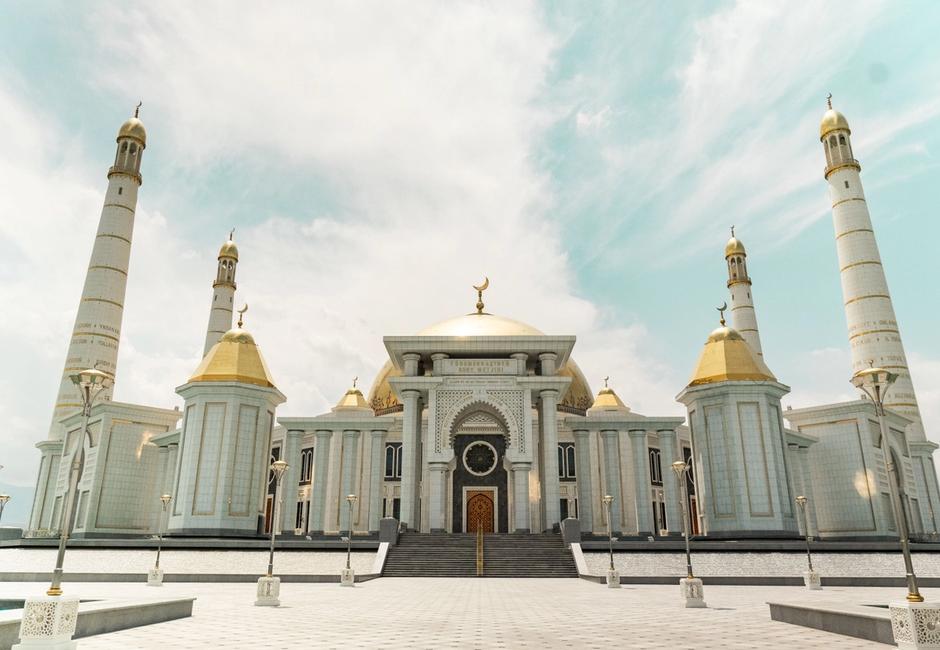
Just outside Ashgabat, in the quiet town of Gypjak, stands one of the most striking and unusual religious sites in Central Asia—the Türkmenbaşy Ruhy Mosque. At first glance, its scale is what captures you: vast, symmetrical, and built almost entirely from white marble that gleams under the Turkmen sun. Often described as one of the largest mosques in the region, it can hold around 10,000 worshippers, yet despite its size, the atmosphere feels calm and deeply reflective. This is not just a mosque—it is also a place of memory. Built in 2004 by order of Saparmurat Niyazov, it stands in his hometown, and right beside it is a mausoleum that adds a powerful emotional layer to the visit. Inside are the tombs of his family: his father, who died during World War II, his mother and two brothers, who were killed in the devastating 1948 Ashgabat earthquake, and Niyazov himself. Knowing this, the site feels less like a monument and more like a deeply personal space shaped by loss, history, and legacy. Architecturally, the mosque blends grandeur with symbolism. Its massive central dome dominates the skyline, surrounded by tall minarets that rise elegantly from each corner. Many elements of the design are said to carry symbolic meaning connected to Turkmen history and spirituality, including references to the 1948 earthquake that reshaped the region. Inside, the space opens up into a vast, light-filled prayer hall where marble, gold accents, and intricate details create a sense of quiet awe. The materials themselves tell an international story. The white marble used throughout the structure was imported from Italy, giving the mosque its polished, almost luminous appearance, while fine wood elements—reportedly including walnut—add warmth and contrast to the interior. The craftsmanship is precise and deliberate, balancing luxury with restraint. What makes this mosque unforgettable, though, isn't just its size or design—it's the feeling you get when you're there. It's quiet, spacious, and slightly surreal, especially compared to the busier, more traditional mosques you might find elsewhere. There's a sense of stillness that makes you slow down, look around, and take everything in more carefully. For many travelers, this may be just another stop on an itinerary. But if you give it time, the Türkmenbaşy Ruhy Mosque reveals something deeper—a place where architecture, personal history, and national identity come together. It's not only one of the most beautiful mosques in Turkmenistan; it's one of the most meaningful.
Yangykala Canyon
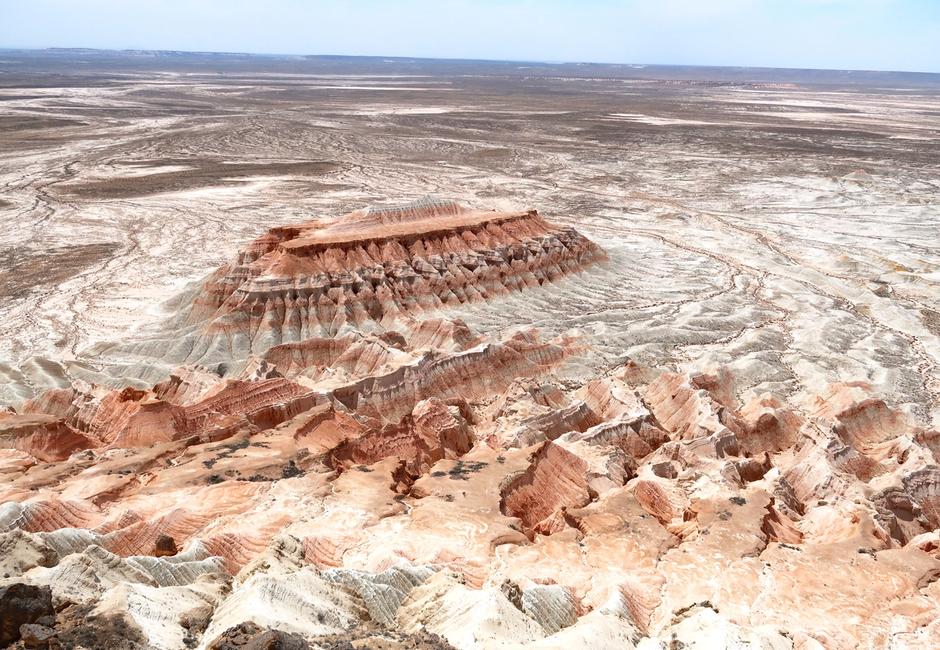
Five and a half million years ago this was the floor of the Tethys Sea; today it is the closest thing Central Asia has to the Grand Canyon, and you will very likely have it entirely to yourself. The Yangykala Canyons — the name means "fire fortresses" — are a sweep of limestone cliffs up to 100 metres tall, banded in pink, crimson, white and yellow, that the retreating sea carved into bastions, ramparts and one famous promontory that juts out like a crocodile's jaw. The colors shift with the hour: chalky and pale at midday, molten at sunset, which is when our drivers aim to have you standing on the rim. This is one of the remotest showpieces in the country — about 160 km east of Turkmenbashi and 165 km north of Balkanabat, the last stretch on rough desert track that demands a 4WD and a driver who knows the way, because there are no signs, no facilities and no other traffic. That emptiness is the point: no railings between you and the drop, no queue at the viewpoint, just wind and geology. Some 25 km beyond the canyons lies Gozli Ata, one of Turkmenistan's most revered pilgrimage shrines, resting in a natural bowl of pink-and-white rock — visiting the two together, as pilgrims and travelers both do, is one of the great experiences of western Turkmenistan. On GÖL NOMADS private tours, Yangykala is the wild heart of our Caspian itineraries: we come up from Turkmenbashi with a packed dinner, watch the cliffs catch fire at dusk, and overnight in yurts by Gozli Ata before continuing toward the Kazakh border or back to the coast. Bring a warm layer even in summer — the plateau wind is real — and twice the memory card you think you need.
Yekegowak Caves
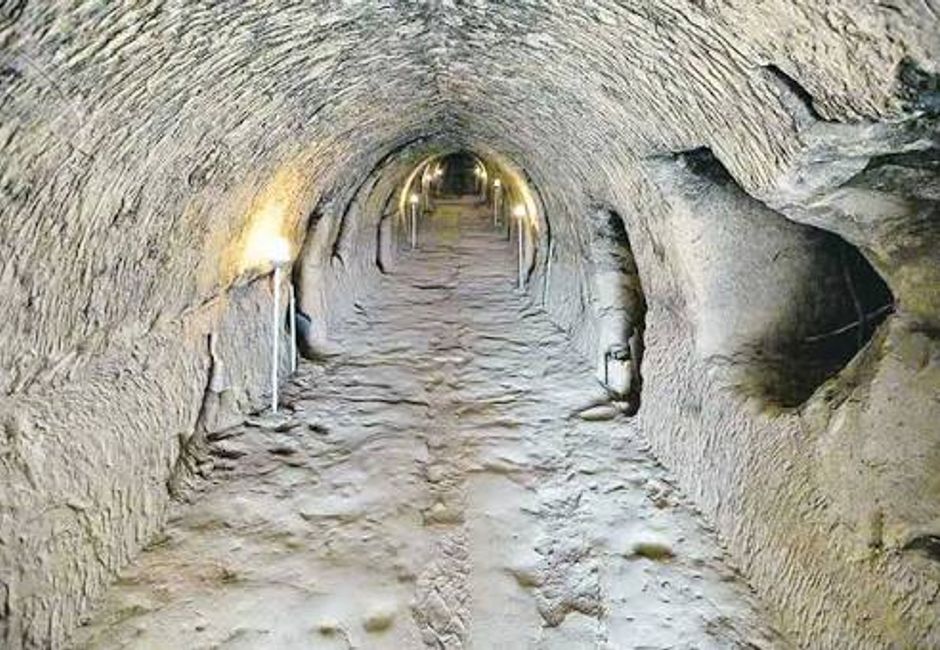
Hidden above the Murgab River, the Yekegowak Caves are one of Turkmenistan's most mysterious historical sites. Carved into the cliffs, this ancient cave complex feels quiet, remote, and deeply atmospheric — a place where history and silence meet. The caves are believed to date back to the 1st century BC and are often described as a remarkable example of early cave architecture in the region. With only one main entrance, the complex was carefully designed to remain protected and almost invisible from a distance. Walking through the narrow passages, visitors can imagine how this hidden place may once have served as a shelter, spiritual space, or secret refuge. What makes Yekegowak special is not only its age, but also its location. Standing high above the river, surrounded by natural landscapes, the caves offer a powerful feeling of isolation and mystery. Unlike large monuments or famous city landmarks, this site feels untouched and authentic. For travelers who enjoy history, archaeology, and unusual places, the Yekegowak Caves offer a rare experience — a quiet journey into Turkmenistan's ancient past, far from the usual tourist routes.
Ready to Experience Turkmenistan?
Let us help you plan an unforgettable journey through these incredible destinations.