Discovering Turkmen Cuisine
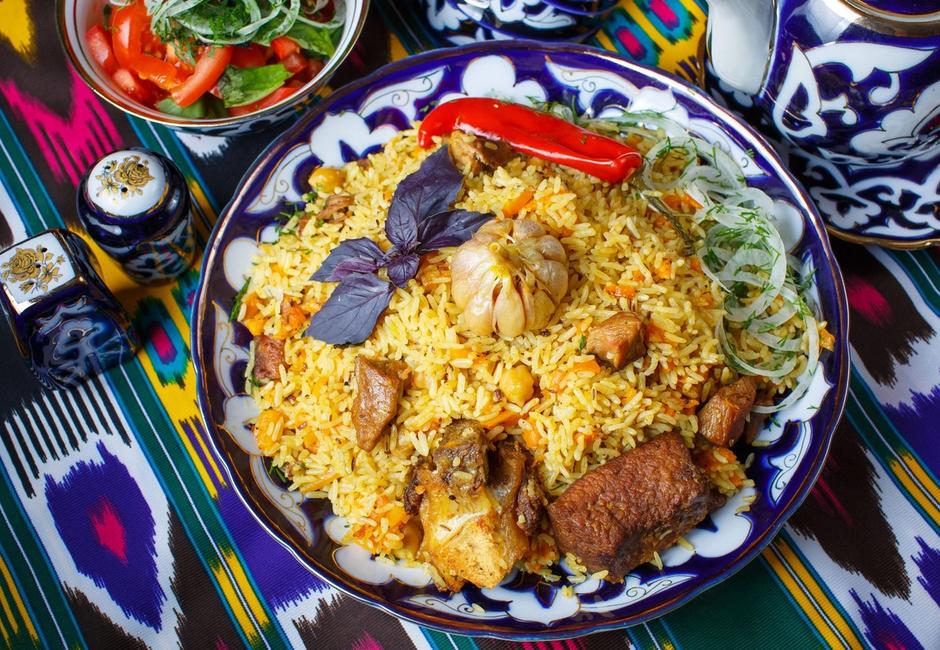
Turkmen cuisine tells the story of a nomadic people who learned to create rich, satisfying meals from simple ingredients, allowing natural flavors to take the lead rather than relying on heavy spices. Meat is at the heart of nearly every table, especially lamb, chicken, and even camel, prepared in ways that highlight its depth and texture. One of the most familiar sights is shashlyk, skewers of meat grilled slowly over charcoal and served with fresh onions, while gowurma offers something more rustic, with meat fried in its own fat and preserved for later. Yet the true centerpiece of Turkmen cooking is palaw, a deeply symbolic dish in which rice is cooked together with tender mutton, sweet carrots, and whole garlic, creating a fragrant and comforting meal often associated with celebration and hospitality. Alongside these dishes, bread holds a place of deep respect in daily life. Çörek, the traditional flatbread, is baked in clay ovens and shared at every meal, treated almost as something sacred, while pishme, small pieces of lightly sweet fried dough, are offered to guests as a sign of welcome. Dumplings also play an important role, with manty and somsa appearing across the country, filled with meat, onions, or sometimes pumpkin, reflecting the seasonal rhythms of the land. One dish that beautifully captures the spirit of resourcefulness is dograma, where pieces of bread are mixed with shredded boiled meat and onions, then moistened with broth, creating a humble yet deeply flavorful meal that connects directly to the nomadic past. Beyond the savory dishes, Turkmenistan is famous for its extraordinary melons, with hundreds of varieties so cherished that they are honored with a national celebration. Their sweetness reflects the richness of the land, just as pumpkins appear in soups or are used as vessels for slow-cooked meals. To complete the experience, green tea flows constantly throughout the day, offering warmth and connection, while traditional drinks like gatyk, a thick yogurt drink, and çal, fermented camel's milk, provide a refreshing tangy contrast to the richness of the cuisine. Through it all, there is an unspoken rule that reveals the culture itself: bread must always be treated with care, never turned upside down or wasted, as it represents not just nourishment, but respect, history, and the enduring spirit of Turkmen life.
Year round
2-3 hours
Highlights
Travel Tips
- •Visit during the Melon Day for peak melon season
- •Treat bread with respect as locals do
- •Accept tea as a sign of hospitality
- •Expect simple, natural flavors rather than heavy spices
- •Choose home-style cooking when possible for authentic experience